Quick question: If women are the fairer sex, then why are they sicker?
Compared with men, women spend 25% more of their lives in poor health and with varying degrees of disability, according to a 2024 report by the World Economic Forum and the McKinsey Health Institute. The factors that underpin this statistic are many and varied, and we’re in no position to propose a wider health reform. No siree! However, with things like heart disease and autoimmune conditions (which are characterized by inflammation) on that list, we’d be remiss not to sing the praises of Omega-3s.
Omega-3s are essential fatty acids that play a crucial role in maintaining overall health. They can be especially beneficial for women, helping to support brain health, heart health, joint health, pregnancy, and hormonal balance, among other things.
OceanBlue’s Omega-3 Options

And just like that, our selection of Omega-3 supplements is summoned to the stage. Here are three in particular that set out to meet the needs of women:
- OceanBlue Omega-3 2100 w/ CoQ10 - Take it to heart: this Professional series formula supports comprehensive heart and cholesterol health, as well as your joints (crucially important as we age).
- Prenatal Vitamin w/ Omega-3 - Oh baby! This well-rounded formula supports every stage of your motherhood journey: from fertility, pregnancy, and breastfeeding through the postpartum.
- OceanBlue Brain Fuel - Feeling scatterbrained? This formula helps replenish the building blocks needed for a perky, healthy brain.
Now that’s out of the way, let’s get back to our regularly scheduled programming: What are Omega-3s? Omega-3 fatty acids are a type of polyunsaturated fats (PUFAs) that are considered essential because our bodies cannot produce them on their own. They’re critical for the proper functioning of various bodily processes and have been linked to numerous health benefits. The three main types of omega-3 fatty acids are alpha-linolenic acid (ALA), eicosapentaenoic acid (EPA), and docosahexaenoic acid (DHA). (ALA can be converted into EPA and DHA, but the conversion is limited, so it is important to obtain EPA and DHA directly from dietary sources or supplements.)
Things to Know About Omega-3s
Consider this our rapid fire round. Key facts about these essential fatty acids, laid out in a numbered list for your convenient consideration.
Benefits: Omega-3s are crucial for overall health. They play vital roles in cell function, inflammation regulation, and brain health, among others.
Dosages. Recommended dosages vary by age, gender and health goals, of course. Because why would you do what’s right for someone else?
Food sources. Omega-3s are found in fatty, cold water fish (salmon, mackerel, sardines), flaxseeds, and walnuts. With that said, to reliably hit your daily quota, it’s often easier to supplement.
Supplement options. Fish oil or algal oil are popular options. OceanBlue offers a whole host of targeted fish oil options—be it for heart health, joint health, or prenatal health—as well as one award-winning vegan option. *bows*
How Do Omega-3s Affect Women's Health?

1. Brain Health
Let’s start with your brain, your most northern organ and every woman’s most desirable asset. Omega-3s happen to do a lot of heavy lifting when it comes to promoting brain health in women—these are a few of the most critical ways: Promote cell membrane health: Studies show that Omega-3s contribute to maintaining the integrity and flexibility of cell membranes in the brain, allowing for optimal communication between brain cells. Support brain blood flow: As this study shows, Omega-3s may improve blood flow in the brain, omega-3s ensure that brain cells receive the necessary nutrients and oxygen for optimal function. Aid in the growth of brain tissue: Omega-3s are known to support the growth and development of brain tissue, promoting overall brain health. Support cognition and memory: Studies suggest that Omega-3 supplementation may contribute to improved cognitive function and memory retention.
2. Mood Disorders
Omega-3s have also been studied for their potential role in managing and preventing mood disorders such as anxiety and depression. Some research suggests that Omega-3 supplementation may help reduce symptoms and improve overall mood in individuals with these conditions.
3. Hormonal Balance
If you need to get off the rollercoaster that is hormonal imbalance, let it be known: Omega-3s may play a part in hormone regulation in women. Research suggests they may help regulate the production and release of hormones, potentially reducing symptoms of hormonal imbalances such as menstrual irregularities.
4. Heart Health
Omega-3s have long been recognized for their beneficial effects on heart health. They: Lower triglyceride levels: Omega-3s help reduce elevated levels of triglycerides, which are a type of fat in the blood associated with an increased risk of heart disease. Support healthy cholesterol levels: Omega-3s may help raise levels of high-density lipoprotein (HDL) cholesterol, often referred to as "good" cholesterol, while reducing levels of low-density lipoprotein (LDL) cholesterol, known as "bad" cholesterol.
5. Joint Health
For women experiencing joint issues or arthritis, it’s been well-documented that Omega-3s may provide relief. They contain anti-inflammatory properties that may help with inflammation and stiffness in the joints, improving overall joint health and mobility.
6. Skin and Eye Health
Omega-3s are said to offer benefits for both skin and eye health:
Skin Health: They help support healthy skin by promoting hydration and elasticity, potentially contributing to a more youthful appearance.
Eye Health: Omega-3s may protect against age-related macular degeneration, a leading cause of vision loss in older women.
Sources of Omega-3s
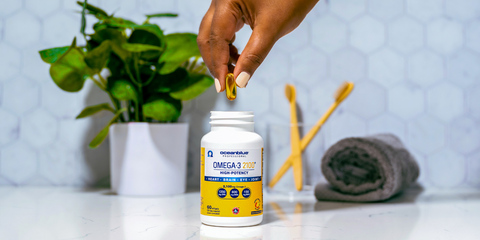
Omega-3 fatty acids can be obtained from both dietary sources and supplements.
Food Sources
- Fatty fish: Fatty fish such as salmon, mackerel, and sardines are excellent sources of omega-3s, especially EPA and DHA.
- Plant-based sources: Flaxseeds, chia seeds, and walnuts are rich in ALA, a type of omega-3 fatty acid.
It’s important to note that while these food sources contain Omega-3s, it may be challenging to obtain sufficient amounts through diet alone. For this reason, supplementing your Omega-3 intake is the most reliable way to make sure you’re hitting your daily quota.
Supplements
The dosage recommendation for supplements may vary based on an individual’s age and health goals. However, current research tells us that 95% of US children and two thirds of adults have omega-3 blood levels below those associated with US Dietary Guidelines, which is 250mg daily.
Here is where we’ll insert ourselves, OceanBlue, once again. Because individual Omega-3 needs vary, we split our products into two lines: the Professional series and the Essentials series. The former offers high-intensity support at 3x the potency of traditional fish oil products, whether you choose our singular hero formula, our award-winning vegan formula, or one of our targeted blends. This line best suits aging customers or anyone who struggles to maintain a nutrient-dense diet.
And for an intro to everyday Omega-3s? There’s the Essentials series. This is more of a maintenance series that befits younger customers or anyone looking to complement their healthy diet with a purposeful, daily serving of these essential fatty acids.
Side Effects of Omega-3s
While Omega-3 supplements are generally safe for most people, it’s not impossible that they might cause some side effects in certain individuals, or when used under certain circumstances:
- Fishy aftertaste or burps: Psssst! If this happens to you, it means your Omega-3 has oxidized, which is not ideal. OceanBlue formulas are burpless, meaning no more gross aftertaste.
- Digestive issues: Taking Omega-3 supplements could cause an upset stomach for sensitive folk. Taking them with a meal is always best.
Who Should Not Take Omega-3s
While Omega-3s provide numerous health benefits, there are a few populations who should exercise caution or avoid omega-3 supplements altogether:
- Anyone with a bleeding disorder: Omega-3s may have mild blood-thinning properties, so those taking blood-thinning meds should consult their healthcare provider before diving in.
- Anyone allergic to fish or seafood: Sounds obvious because it is! But let the records show that people with fish or seafood allergies should avoid fish oil supplements!
- Pregnant or breastfeeding women: Pregnant or breastfeeding women should consult their healthcare provider before starting omega-3 supplements to ensure proper dosage and safety.
FAQs

The TL;DR for all ye busy women!
1. What are Omega-3s?
Omega-3s are essential fatty acids that play a crucial role in maintaining overall health. Your body can’t make them by itself, so you’re going to have to get after them yourself! They’re particularly important for women's health, supporting brain function, heart health, joint health, and hormonal balance.
2. What are the primary sources of Omega-3 fatty acids?
Omega-3 fatty acids can be found in fatty fish (salmon, mackerel, sardines), flaxseeds, chia seeds, and walnuts.
3. Are Omega-3s safe to take every day?
Omega-3 supplements are generally safe for daily use. However, you should absolutely follow the recommended dosage and consult a healthcare professional for personalized advice.
4. What are the potential benefits of Omega-3s?
Omega-3s offer myriad benefits, including promoting brain health, supporting heart health, improving joint health, enhancing skin and eye health, and aiding in hormonal balance.
5. Who Should Not Take Omega-3s?
If you're taking blood-thinning meds, have seafood allergies, or are pregnant or breastfeeding, you should consult their healthcare provider before taking Omega-3 supplements.
6. What is the recommended dosage of Omega-3s?
The recommended dosage of Omega-3s varies based on age, health conditions, and individual needs. But for what it’s worth, 250mg is the standard daily amount of Omega-3 intake for adults and children, consistent with US DIetary Guidelines.
7. Are there any side effects of Omega-3 supplements?
If you’re new to Omega-3s and take a particularly potent dose on an empty stomach, there’s a chance you’ll have an upset tummy. To be safe? Take them with food. To be safer still? Consult a healthcare provider if these side effects become severe or persistent.
8. Can Omega-3s interact with medications?
Omega-3s may interact with certain medications, particularly blood-thinning medications. It is crucial to inform your healthcare provider about any medications you are taking before starting omega-3 supplements.
9. Should pregnant or breastfeeding women take Omega-3 supplements?
Pregnant or breastfeeding women should consult their healthcare provider before taking Omega-3 supplements to ensure proper dosage and safety.
Final Thoughts

Omega-3 fatty acids play a vital role in supporting women's overall health, with specific benefits for your brain, heart, joints, skin, and hormonal balance. While Omega-3s can be included in your diet, supplementing is the most reliable way to make sure you’re meeting your daily needs. OceanBlue offers a range of Omega-3 options designed to support women's health in various forms, including fish oil varieties, a vegan option and a prenatal multivitamin. Optimize your wellness routine with OceanBlue and feel more like you.
References
The science behind dietary omega-3 fatty acids
Omega-3 Fatty Acids, Cognition, and Brain Volume in Older Adults
Effects of Omega-3 Polyunsaturated Fatty Acids on Brain Functions: A Systematic Review
Does Fish Oil Reduce the Risk of Cardiovascular Events and Death? Recent Level 1 Evidence Says Yes
Omega-3 Fatty Acids for the Management of Osteoarthritis: A Narrative Review