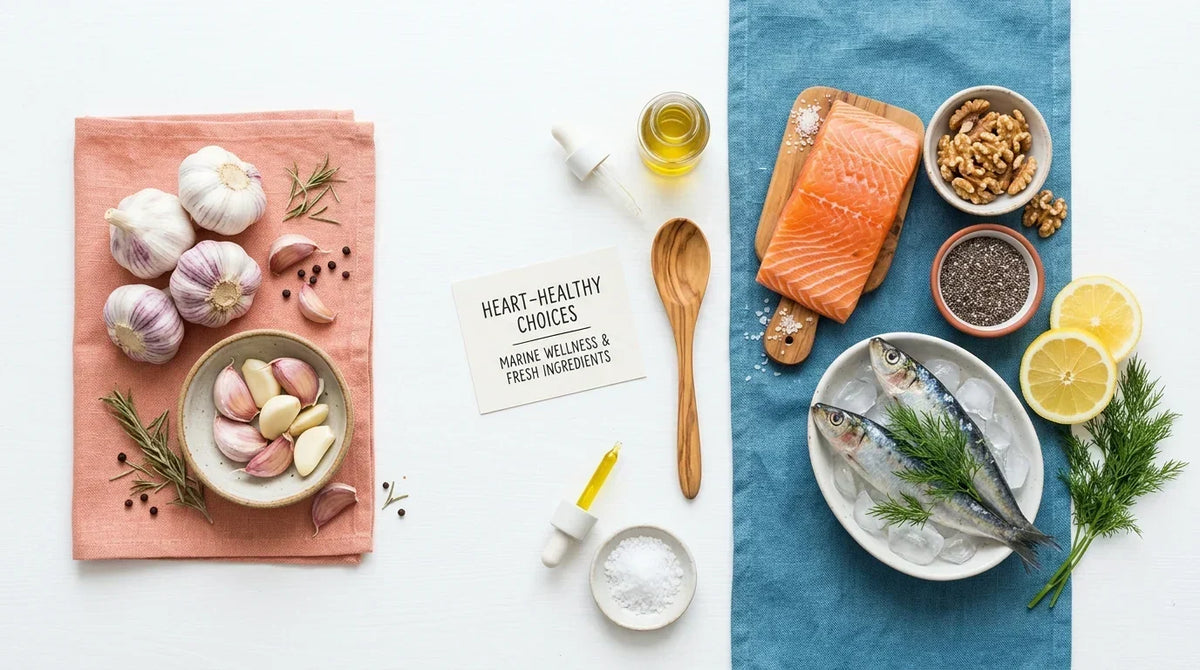
Americans spend an estimated fifty billion dollars each year on dietary supplements, and a large share of that money chases the promise of a healthier heart. That figure alone explains why so many shoppers weigh fish oil against garlic for cholesterol support. Before you compare capsules, it helps to understand what each ingredient actually does inside the body, and our guide to Omega-3 supplement uses and daily benefits is a useful starting point for that context.
Both ingredients have impressive reputations, yet reputation and evidence do not always align. When researchers have tested these products head to head against medication, the results have surprised many consumers across the US. According to a Cleveland Clinic trial, six widely used heart supplements did not reduce LDL cholesterol (the “bad” cholesterol) when measured against a low-dose statin or a placebo.
The Honest Answer From Recent Research
If you are standing in a pharmacy aisle, you may reasonably ask which is better for cholesterol fish oil or garlic. The most rigorous head-to-head data comes from the SPORT trial, and it reframes the entire question. Researchers randomized 199 adults aged 40 to 75 with elevated cardiovascular risk to a statin, a placebo, or one of six supplements over 28 days.
The outcome was clear. The low-dose statin lowered LDL cholesterol by an average of 37.9 percent, while none of the supplements produced a meaningful change compared with placebo. Notably, the garlic product was associated with a slight increase in LDL rather than a decrease. In other words, neither fish oil nor garlic behaved like a cholesterol-lowering drug in this population.
What Garlic Contributes
Garlic has been valued in kitchens and traditional practices for centuries. It contains sulfur-based antioxidants and compounds such as allicin, which give the bulb its distinctive aroma. Some early observational work suggests that garlic offers a modest role in supporting healthy circulation, and remains a flavorful, nutrient-dense addition to everyday cooking.
Controlled research, however, tempers the enthusiasm. As reported by a cardiovascular news analysis, the garlic supplement in the SPORT trial did not improve cholesterol numbers and trended in the wrong direction. Garlic can still be part of a balanced, heart-conscious plate, but it is best viewed as food first rather than a cholesterol treatment.
What Fish Oil and Long-Chain Omega-3s Offer
Fish oil delivers long-chain omega-3s, primarily EPA and DHA, which the body cannot manufacture on its own in sufficient quantities. These fats are studied for their role in supporting healthy blood vessel function and helping maintain triglyceride levels already within a normal range. That is a different mechanism from lowering LDL, and the distinction matters when you set expectations.
The triglyceride connection has meaningful support. In a 2024 meta-analysis of 16 randomized trials, fish oil supplements were associated with a significant reduction in triglycerides compared with corn oil, alongside a small favorable change in HDL cholesterol (“good” cholesterol). To understand how these fats function day to day, our overview of Omega-3 fatty acids: benefits and sources breaks down where they come from and how they work. These statements have not been evaluated by the FDA. This product is not intended to diagnose, treat, cure, or prevent any disease.
A Side-by-Side Comparison
The table below summarizes how these options differ on the criteria that shoppers care about most. It also shows where our own approach to purity and sourcing fits within the picture.
|
Option |
Key compounds |
Primary supported role |
Purity and testing focus |
|---|---|---|---|
|
Garlic supplement |
Allicin, sulfur antioxidants |
Culinary and general wellness |
Varies widely by product |
|
Generic fish oil |
EPA and DHA |
Triglyceride and cardiovascular support |
Inconsistent; potency and freshness vary |
|
OceanBlue Omega (our fish oil) |
Concentrated long-chain omega-3s |
Cardiovascular health and triglycerides already in a normal range |
Mercury-free, distilled 27 times, third-party tested, FOS-accredited sourcing |
OceanBlue’s products are refined, concentrated, and distilled in facilities in the USA and sourced from anchovies and sardines caught in Peruvian coastal waters. If purity is your concern, our explainer on Omega-3 supplement side effects to know can help you set realistic expectations. These statements have not been evaluated by the FDA. This product is not intended to diagnose, treat, cure, or prevent any disease.
The Food-First Foundation
Whole foods remain the most dependable source of these beneficial compounds. Fatty fish such as salmon, sardines, mackerel, herring, and anchovies deliver omega-3s in their natural form, and most guidance suggests including them two to three times per week. Raw garlic, meanwhile, carries the highest levels of allicin, since cooking reduces some of its active compounds.
Supplements exist to fill gaps, not to replace a balanced pattern of eating. If your diet already includes regular servings of fish and plenty of plants, a capsule may play a smaller role. If it does not, a high-purity omega-3 product can offer a practical, convenient option.
Safety, Interactions, and Smart Use
Both ingredients are generally well tolerated, yet they are not risk-free. Fish oil can cause digestive upset or a fishy aftertaste, and people with seafood allergies should choose algae-based alternatives. Garlic may lead to breath and body odor, and those allergic to allium plants should avoid it.
Interactions deserve particular attention. Both can affect bleeding, so if you take blood thinners, blood pressure medication, or cholesterol-lowering drugs, please talk to your healthcare provider before starting either supplement. The same advice applies during pregnancy, for children, and for anyone managing a diagnosed condition or specific dosing needs.
Bringing It All Together
When you compare fish oil and garlic for cholesterol, the honest takeaway is that neither functions like medication for lowering LDL cholesterol, and rigorous testing confirms it. Garlic shines as a flavorful whole food and provides allicin, while fish oil offers concentrated long-chain omega-3s that support cardiovascular wellness and triglycerides already within a normal range. Build your foundation on nutrient-dense meals, treat supplements as a complement, and coordinate any heart concern with a qualified clinician who knows your full history.
Take action with OceanBlue Omega
If you have decided that a high-purity omega-3 belongs in your routine, the next step is choosing a product you can trust for potency and cleanliness. Quality varies dramatically across the US market, and purity is precisely where we focus our attention.
Our fish oil is mercury-free, distilled 27 times to remove impurities, and sourced only from FOS-accredited fisheries, then third-party tested for peace of mind. Explore our heart support omega-3 supplements to find a concentration that fits your daily goals. These statements have not been evaluated by the FDA. This product is not intended to diagnose, treat, cure, or prevent any disease.
Frequently Asked Questions
Does fish oil lower cholesterol?
Fish oil is not a cholesterol-lowering medication, and controlled trials show it does not meaningfully change LDL cholesterol. It provides long-chain omega-3s that support cardiovascular health and help maintain triglycerides already within a normal range. Please consult your healthcare provider for personalized guidance.
Is garlic better than fish oil for the heart?
Neither outperformed a placebo for LDL cholesterol lowring in the SPORT trial, and garlic even trended slightly upward. Garlic works best as a flavorful whole food, while fish oil contributes concentrated omega-3s. Each plays a different supportive role rather than acting as a treatment.
Can I take garlic and fish oil together?
Many people combine them, and each offers distinct compounds. However, both can influence bleeding, so speak with your healthcare provider first, especially if you take blood thinners or other prescription medications.
How do I choose a high-quality fish oil supplement?
Look for potency, freshness, and verified purity, since quality varies widely between brands. Our omega-3 products are distilled 27 times, mercury-free, and third-party tested to address common concerns about impurities. Checking for accredited sourcing is also a helpful signal.
Should supplements replace prescribed cholesterol treatment?
No. Research shows a low-dose statin reduced LDL cholesterol far more than any supplement tested. Supplements can complement a healthy lifestyle, but decisions about managing cholesterol belong with your healthcare provider.